Rate Analysis · Estimation
Rate Analysis in Construction: How Item Rates Are Built Up
A BOQ tells you how much work there is. Rate analysis tells you what each unit of that work should cost. Together they turn a set of drawings into a reliable budget or tender price.
What is rate analysis?
Rate analysis works out the cost of one unit of an item of work, such as one cubic metre of concrete, one square metre of plastering or one square metre of 200 mm block masonry, by adding up everything needed to produce it.
Components of an item rate
- Materials: the quantity of each material per unit (cement, sand, aggregate, blocks, mortar, tiles…) multiplied by its current rate.
- Wastage: an allowance for cutting, breakage and handling losses.
- Labour or service: the cost of the crew to do the work, often taken from current labour contractor rates per unit.
- Tools & plant: shuttering, scaffolding, mixers, vibrators and small tools.
- Water and sundries: water charges and small consumables.
- Overheads and profit: where the rate is for a tender or contractor price.
A worked structure (illustrative)
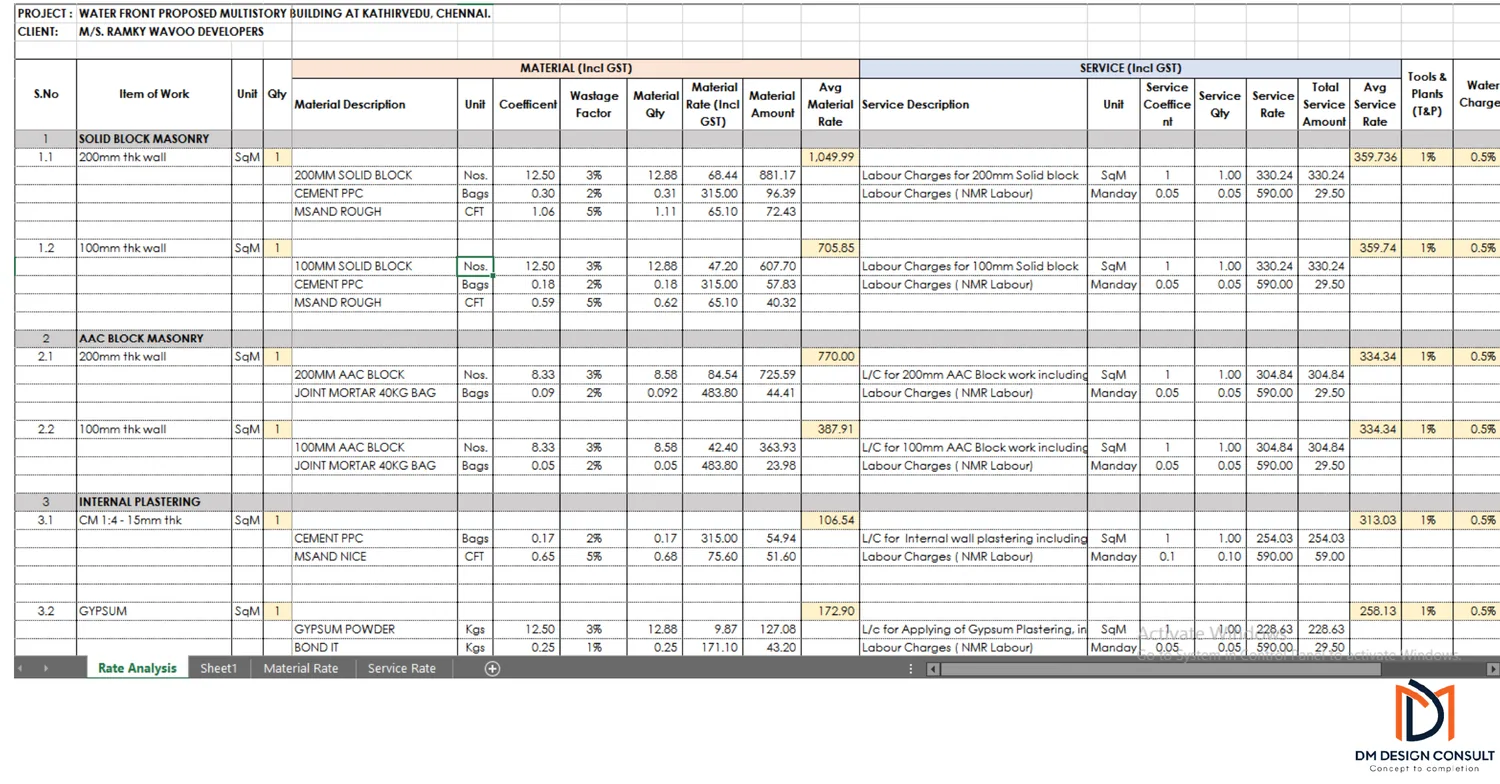
For an item like "200 mm thick solid block masonry", a rate analysis sheet lists:
| Line | What is calculated |
|---|---|
| Blocks | Number of blocks per sqm × block rate, plus wastage |
| Mortar | Cement bags and sand per sqm for the joint thickness × rates |
| Labour | Masonry labour rate per sqm |
| Tools & plant | Small percentage for scaffolding and tools |
| Water | Small percentage for water charges |
| Total | Rate per sqm used in the BOQ |
Why it matters
- For owners: you can tell whether a contractor's rate is fair, too high or unrealistically low.
- For contractors and tenders: you submit a price you can actually deliver at, built from current supplier rates rather than last year's numbers.
- For changes: when a specification changes (say, from red brick to AAC block), the rate can be rebuilt quickly and transparently.
Keep rates current
Material prices move through the year, so a rate analysis should use current quotes for cement, steel, blocks and sand. We build our rate analyses from current material, labour and service rates and issue them alongside the BOQ in the same workbook.
Frequently asked questions
What is rate analysis in civil engineering?
It is the method of working out the cost of one unit of an item of work by adding material, labour, wastage, tools and plant, water and, where applicable, overheads and profit.
Why do contractor rates differ so much?
Differences come from material sources, labour rates, wastage assumptions, overheads and profit. A rate analysis shows which component is driving the difference.
How often should rates be updated?
Whenever material prices move noticeably. Cement, steel, sand and block prices change during the year, so tender and estimate rates should use current quotes.
Get an accurate estimate for your project
Want a rate analysis for your BOQ or tender? Talk to us on WhatsApp. Prepared by Mrs. Dhivya Mani, B.E. Civil Engineer, with 15+ years in quantity surveying.
💬 WhatsApp for an Estimate 📞 +91 78716 80027